MONOLITH
ARCHIVE
TESTIMONIALS
PHILOSOPHY
MATERIALS
SUBSCRIBE
GLAZING
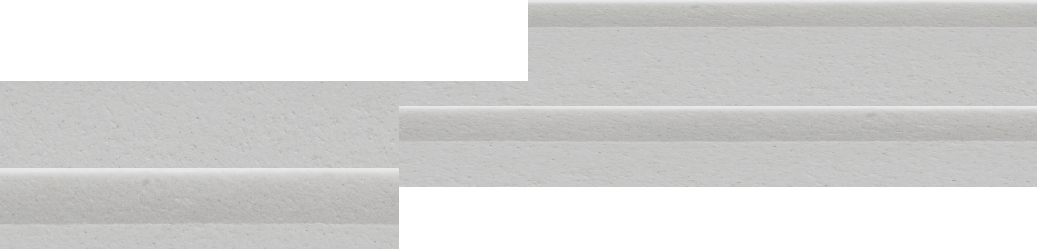
A translucent matte glaze is applied by immersion. It seals the surface without gloss, emphasizing the tactile quality of porcelain. The final firing fuses glaze and body into one.
Matte finish
FIRING
The moment of transmutation. At 1370°C, the clay sinters into porcelain — a vitreous, non-porous material. Its chemical structure changes irreversibly, gaining strength and acoustic resonance.
1370°C
FORMING
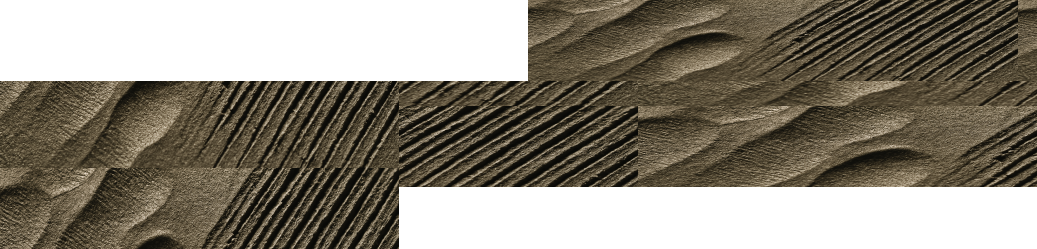
The purified clay is thrown on a wheel. Twelve rotations define the primary form. The face is sculpted by hand in the leather-hard state — a dialogue between machine precision and human touch.
12 rotations
PURIFICATION
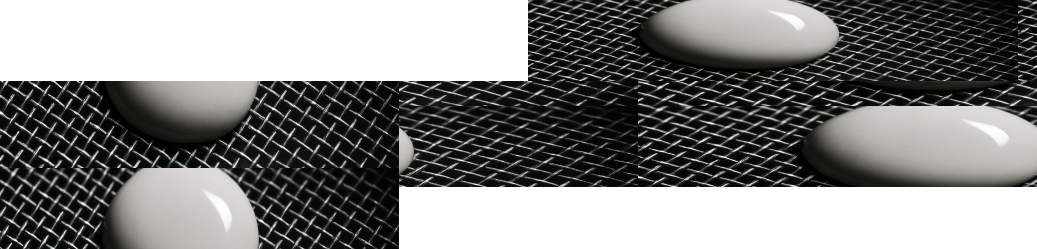
The clay is mixed with water and filtered through progressively finer sieves. This removes impurities larger than 0.3mm, ensuring structural integrity and a flawless surface.
0.3mm sieve
CLAY
The moment of transmutation. Clay becomes porcelain, gaining strength and memory.
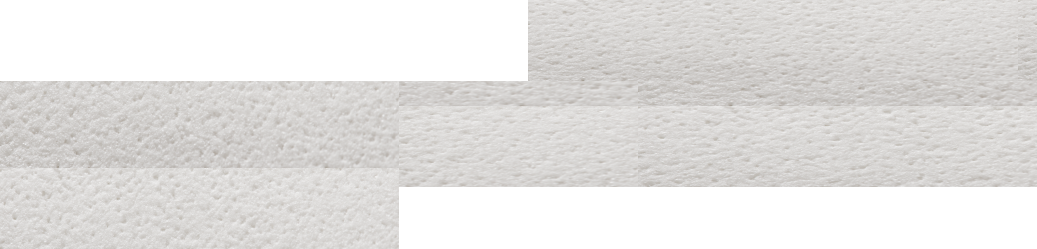
The origin. Sourced from a single deposit in Limoges, France. Its high kaolin content guarantees whiteness and plasticity — the first memory of the material.
Kaolin, 70%
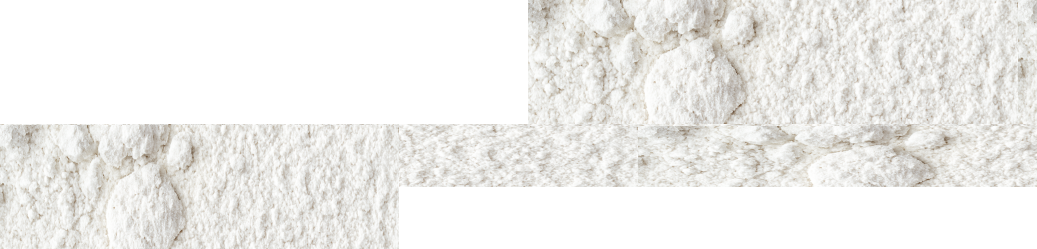
Materials
Deconstructing Object No. 14. A map of its substance.
Every object is a record of transformation. This map traces the journey of material from raw state to final form — each step a decision that defines its character.
Click on a node to explore.
[Clay]
|
▼
|
▼
[Purification]
|
▼
▼
[Forming]
|
▼
▼
[Firing]
|
▼
▼
[Glazing]
MONOLITH
An archive of singular objects.
Contact
info@monolith-archive.com
© 2025 Monolith Archive. All rights reserved.
|
|
